Crash, Call, Clear
Most drivers don’t realize how fast things can escalate after a crash. Picture this: a semi hauling auto parts clips a guardrail during freezing rain and ends up jackknifed across two lanes. The driver: shaken but unhurt. What happens in the next ten minutes can mean the difference between a controlled recovery and a much worse situation. When you’re dealing with a semi accident, those first few minutes set the tone for everything that follows, and our Gardner semi towing crew sees this play out constantly on highways around the Chicago suburbs.
Get Clear And Get Visible
The first thing we tell every driver is to move. If the truck is drivable and you’re not blocking all lanes, get it onto the shoulder or as far right as physics allows. If you can’t move it, get yourself out of the cab and behind the guardrail or well off the pavement. We’ve worked accidents where a second collision happened because a driver stayed in the cab waiting for help. On a route like I-55 near Gardner, traffic moves at 70 mph even in bad weather. You’re not safe sitting still.
Once you’re clear, make the scene visible. Triangles go out at 10 feet, 100 feet, and 200 feet behind the truck if you can do it safely. Hazards on. If it’s dark, use a flashlight or your phone light to signal approaching traffic. We’ve responded to Gardner semi towing calls where the only reason we found the truck quickly was because the driver had his phone flashlight waving near the shoulder. Visibility buys you time until we arrive with strobes and a recovery plan.
Who To Call And What To Say
Call 911 first if there’s any injury, fuel spill, or if you’re blocking traffic. Then call your dispatcher and your insurance company. Have your location ready. Use mile markers, exit numbers, or cross streets. Saying “I’m on I-55” doesn’t help us much when I-55 runs for miles through Will County. We need specifics so we can stage the right equipment and get there fast.
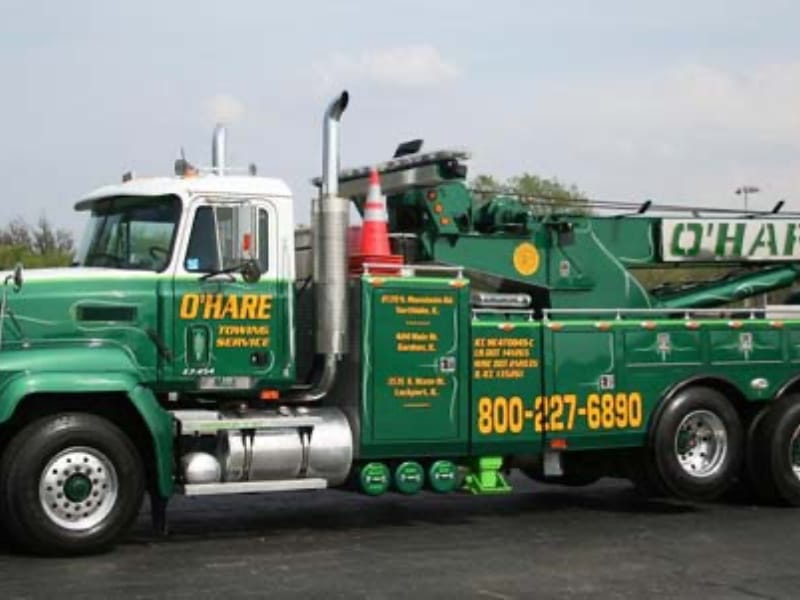
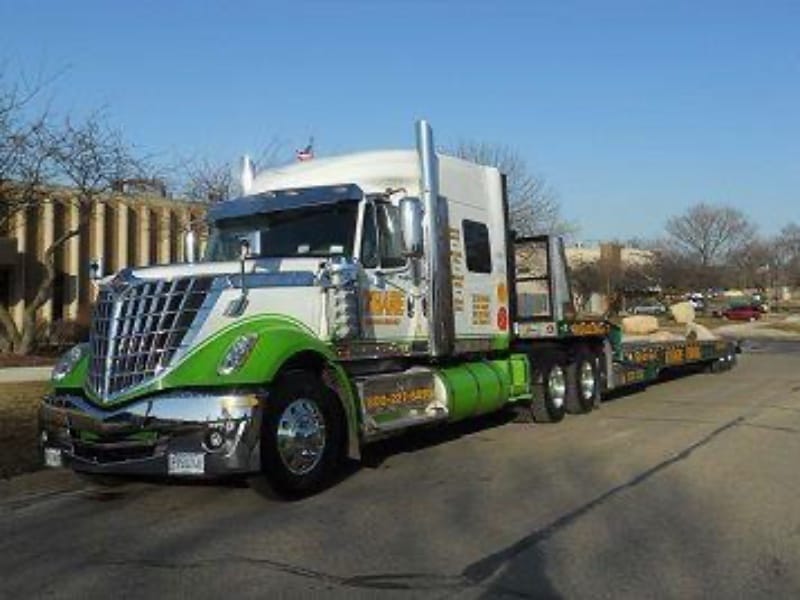
When you call for Gardner semi towing, tell us what you’re hauling and whether the load shifted. A flatbed with steel coils needs different rigging than a dry van with palletized freight. Tell us if the truck is leaking fluids, if the axles look damaged, if the fifth wheel is compromised. The more we know before we roll, the better we can plan the recovery. We keep rotators, heavy wreckers, and landoll trailers staged around the area specifically because semi accidents require the right tool for the job.
- Don’t leave the cab without your paperwork, wallet, and phone
- Don’t accept help from passing motorists unless it’s a clear safety issue
- Don’t try to reposition the truck yourself if it’s already stopped safely
- Don’t stand in or near active lanes for any reason
O’Hare Towing Service Handles Gardner Semi Towing With Heavy Duty Equipment
Our Gardner semi towing team has been running recoveries in the Chicago suburbs since the 1960s, and our heavy duty towing division handles everything from rollovers to multi-vehicle pileups. Our crews work I-55, I-80, and I-57 regularly, and we know the clearance issues, the turnaround points, and the staging areas that matter when a semi goes down. We stage rotators and heavy wreckers at four terminals so response time stays short even during peak traffic hours.
When a truck goes off the road near Gardner, our Gardner semi towing operators usually see it involve either weather, a blown steer tire, or a driver who misjudged a merge. The accidents we respond to fastest are the ones where the driver followed the basics: got clear, stayed visible, and called with accurate information. We’ll bring the Gardner semi towing equipment and the experience. You bring us good information and stay out of harm’s way until we get there.
FAQs
Should I move my semi after an accident even if it still runs?
If you can safely get it onto the shoulder without causing more damage, yes. Sitting in a travel lane creates a secondary collision risk. If the steering or brakes feel compromised, leave it and get yourself clear instead.
What happens if my load shifts during the crash?
Don’t try to resecure it yourself on the roadway. We’ll assess the load when we arrive and determine whether we need additional equipment or if the trailer needs to be offloaded before towing. Shifted cargo changes the center of gravity and makes recovery more complex.
How long does a typical semi recovery take on the highway?
It depends on the damage and the position of the truck. A simple pull back onto the road might take 30 minutes. A rollover with cargo spillage can take four hours or more, especially if we need to transfer the load first.
Can I stay with my truck during the recovery?
Usually no. We need you clear of the work zone for safety reasons. Our crew will communicate with you from a safe distance, and you’ll be able to retrieve personal items once the truck is secured and moved off the roadway.
What if the accident happens in a construction zone?
Construction zones often have narrower lanes and less shoulder space, which complicates the recovery. We’ll coordinate with state troopers to control traffic and create a safe work area. Expect longer response and recovery times in these situations.
Do I need to provide my own traffic control after a crash?
Triangles are required by law and you should deploy them if safe to do so. Once emergency responders and tow trucks arrive, we handle traffic control with our lights and often with police assistance. Your job is to stay safe and out of traffic.