The Truck Is Only the Beginning
A tractor-trailer crash already presents a substantial recovery problem. Put several passenger vehicles on the trailer, however, and every decision can affect more than the tractor and carrier. With I-55 heavy towing, a loaded car carrier introduces multiple pieces of cargo, elevated decks, restraints, changing weight distribution, and vehicles that may need their own transportation after the carrier is recovered.
Before the carrier moves, crews have to understand what happened to everything riding on it.
A Car Carrier Is Different From an Enclosed Trailer
A commercial vehicle hauling cars does not contain its freight inside four walls. The cars sit on an exposed framework, often on upper and lower decks, with each one secured individually.
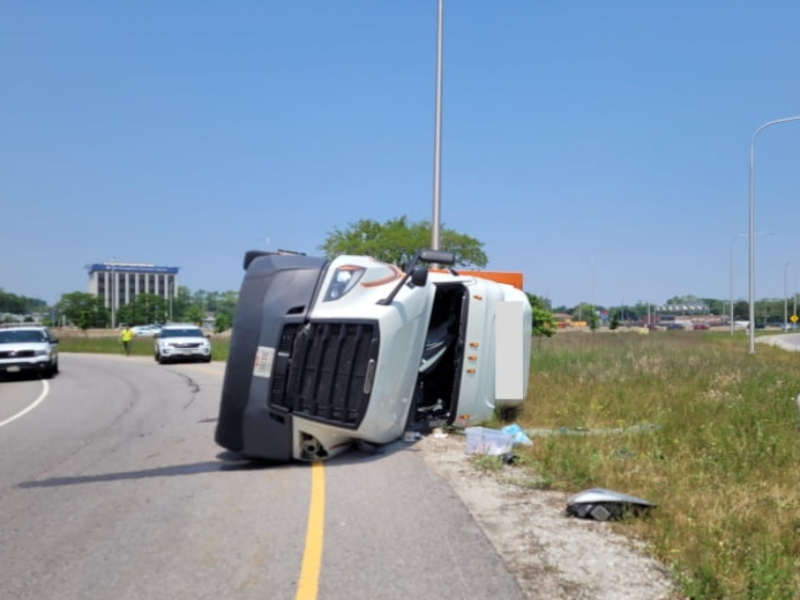
After a rollover or serious collision, that arrangement may look very different. A deck can become distorted. Restraints can be damaged or placed under unusual tension. One car might remain where it started while another shifts against part of the carrier.
That means crews cannot assume that because one vehicle remains secure, the rest of the load does too.
Does the Cargo Come Off Before the Carrier Comes Up?
This is one of the central questions in a loaded car carrier recovery.
Leaving the cars aboard avoids an unloading operation, but only if the carrier and its cargo are in a condition that allows it. Uprighting the carrier changes the angle of the decks and the forces acting on every vehicle attached to them.
Removing cars first creates a different set of challenges. Upper-deck vehicles may be difficult to access, and collision damage may prevent some cars from rolling or steering normally.
There is no universal sequence. The condition of the carrier and each vehicle determines what has to happen first.
One Load Can Create Several Separate Recovery Problems
The unusual part of heavy-duty recovery on I-55 is that a single wreck can leave several vehicles needing different solutions.
Crews may have to evaluate questions such as:
- Are all of the cars still attached securely?
- Have the upper or lower decks moved?
- Can the decks be lowered or repositioned?
- Are damaged cars able to roll and steer?
- Will any vehicle interfere with uprighting the carrier?
- Where can unloaded cars be placed at the scene?
The answers can turn what appears to be one tractor-trailer recovery into a series of smaller operations.
Unloading the Carrier Changes the Carrier
Suppose several cars need to come off. Every vehicle removed changes the total weight and where that weight is concentrated.
During car carrier recovery near I-55, that matters because recovery decisions have to reflect the carrier as it sits at that moment. A carrier with six vehicles aboard does not have the same weight distribution after three have been removed.
The cars also need somewhere to go. A damaged vehicle may require a separate tow, while an undamaged one still needs transportation because it was cargo in the first place. Vehicle transport assistance along I-55 can therefore become part of clearing the original truck wreck.
Upright Does Not Necessarily Mean Roadworthy
Getting the carrier back onto its wheels solves one problem, but it does not establish that the equipment can just simply be driven away.
Axles, suspension components, tires, decks, or the tractor itself may have sustained damage. With tractor-trailer recovery around I-55, the next step depends on what remains functional after the carrier is upright.
The same assessment applies to the cars it was hauling. Some may be unaffected. Others may have damage caused by the collision, shifting cargo, or the carrier structure itself.
Clearing the Scene Can Take Several Moves
A normal semi recovery may end with the disabled combination leaving behind one tow truck. A loaded carrier can require several departures.
The tractor and carrier may need semi towing near I-55, while individual cars require separate transport. Any vehicles removed before the recovery also have to be accounted for once the carrier is ready to leave.
That is what makes these incidents unusual. The carrier is one truck, but its recovery can involve many vehicles.
O’Hare Towing Service for I-55 Heavy Towing
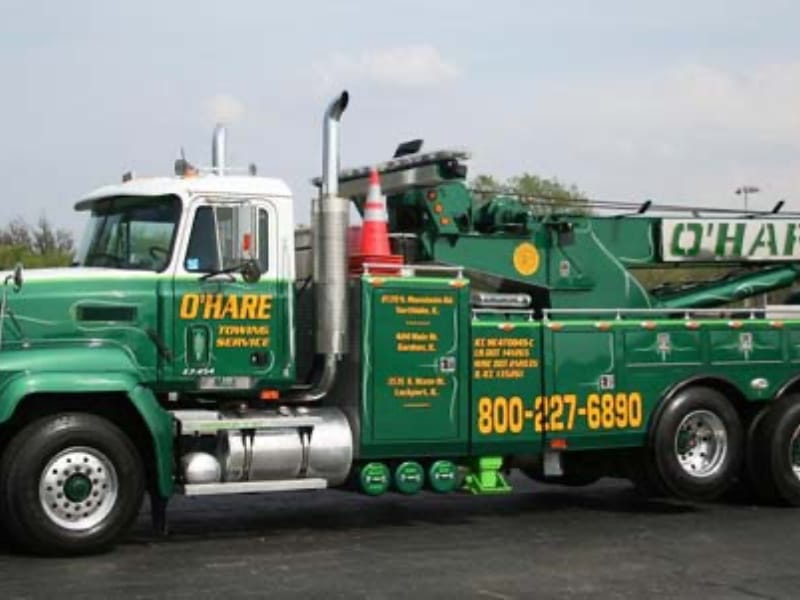
O’Hare Towing Service serves the Greater Chicagoland area, where heavy-duty recovery can involve equipment carrying considerably more than ordinary enclosed freight. Car carriers are a clear example because every vehicle aboard becomes part of the recovery assessment.
For heavy towing along I-55, crews may need to address the carrier structure, its changing weight, and the condition of several transported vehicles before the scene can be cleared. I-55 heavy towing for a loaded car carrier is not simply about moving one damaged truck. It is about working through several connected recovery and transportation problems in the right sequence.
FAQs
Why is a loaded car carrier harder to recover than a regular semi?
A car carrier holds several individual vehicles on exposed decks. After a crash, each car, restraint, and section of the carrier can be in a different condition.
Do the cars have to be unloaded before a carrier is uprighted?
Not always. The decision depends on the condition of the carrier, its decks, the restraints, and the position of the vehicles aboard.
What happens to cars removed from a damaged carrier?
They need to be staged and eventually transported from the scene. Cars damaged in the crash may require separate towing rather than normal loading.
Can an undamaged car still need towing after a carrier accident?
Yes. The car was being transported as freight, so it may still need another way to reach its intended destination even if it remains undamaged.
How does unloading cars affect the recovery?
Each car removed reduces the carrier’s total weight and changes its weight distribution. Crews have to account for those changes as the recovery progresses.
Can a car carrier be driven away after it is uprighted?
That depends on its condition. Damage to the tractor, decks, axles, suspension, tires, or other components may mean the carrier needs to be towed.