
Why Air Brake Problems Deserve Attention
A loaded semi can feel steady and predictable on a clear morning drive. Then a warning light flashes, the pedal feels different, and the trip changes in a hurry. Our tow truck team see this happen often on busy freight routes, which is why we take I-355 semi towing seriously from the first seconds of getting the call.
Air brakes work through compressed air instead of hydraulic fluid. The system depends on air tanks, lines, compressors, valves, and brake chambers all working together. One worn part can lower braking power and leave a truck stranded on the shoulder.
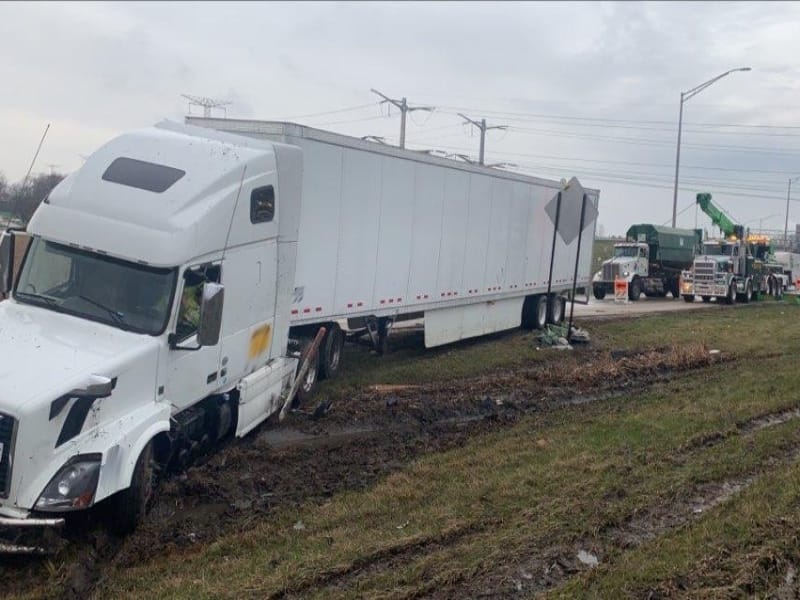
Common Causes of Air Brake Failure
Air leaks rank near the top of the list. Rubber lines crack over time, fittings loosen, and valves wear out after thousands of miles. A small leak may seem minor at first, though it can drain the system until the brakes no longer respond the way they should.
The air compressor can also fail. If the compressor stops building pressure, the tanks never reach the level needed for normal braking. Drivers may notice the low-pressure warning before the truck loses braking strength.
Moisture causes trouble too. Water can build up in the tanks and lines, especially during cold weather. In freezing temperatures, that moisture can block airflow and keep the brakes from working correctly.
Warning Signs Drivers Should Never Ignore
Most air brake problems give a few clues before they turn into a breakdown. Drivers who notice those signs early have a better chance of getting off the road before the situation gets worse. We often receive calls for I-355 semi towing after a driver notices a problem but keeps moving for several more miles.
Watch for These Red Flags
- Low air pressure warning light or buzzer
- Brake pedal that feels soft or slow to respond
- Hissing sounds near air lines or tanks
- Truck pulling to one side during braking
- Longer stopping distance than usual
- Parking brakes that engage on their own
Each of these signs points to a problem somewhere in the system. A loud hissing sound often means an air leak. A low-pressure warning usually means the compressor or tanks are not keeping up.
What Drivers Should Do Right Away
The first step is to slow down and move to a safe location. Drivers should avoid hard braking because sudden pressure changes can make the problem worse. Once parked, turn on the hazard lights and set out warning triangles if traffic is heavy.
Next, check the air pressure gauges and listen for leaks. If the truck cannot build pressure, do not keep driving. We have handled towing calls for trucks that traveled a few more exits and ended up causing more damage to the brake system.
A quick inspection can help identify the problem. Look for broken hoses, loose fittings, or visible frost around the air lines. Even if the issue seems small, it still helps to call for service before getting back on the road. Many drivers contact us for I-355 semi towing after finding a damaged line or failed compressor.
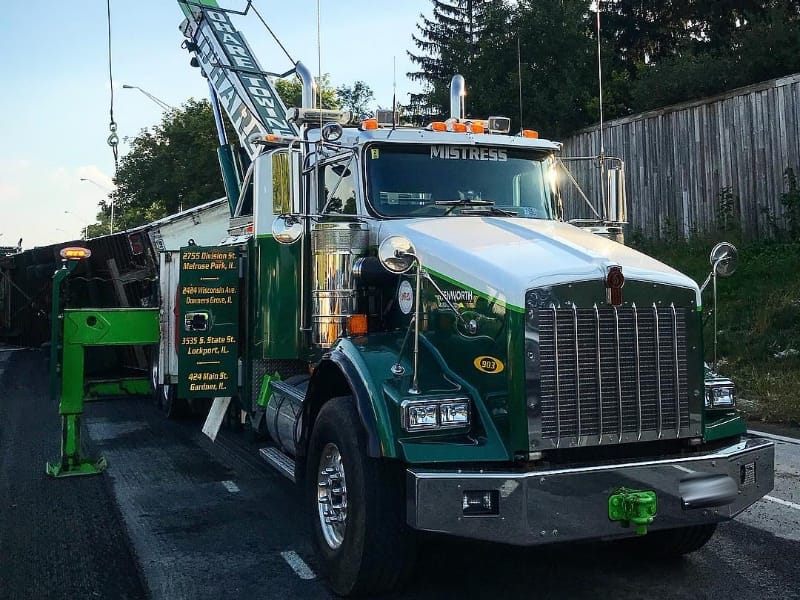
How O’Hare Towing Service Handles I-355 Semi Towing Calls
Air brake trouble can leave a truck in a difficult spot, especially along a busy stretch of interstate. At O’Hare Towing Service, we respond to I-355 semi towing calls with heavy-duty wreckers and trained operators who know how to work around large commercial vehicles. We move the truck to a repair shop, staging yard, or another safe location based on what the driver needs.
We also know that time matters when a load sits still. Our team handles I-355 semi towing across the corridor and helps drivers get off the shoulder quickly. We stay ready for disabled semis, brake failures, lockups, and diesel roadside assistance issues at any hour of the day. I-355 semi towing remains one of the most common reasons drivers call us, and we treat every call with urgency and care.
FAQ
What causes air brakes to fail on a semi truck?
Air brake failure often starts with leaking air lines, a worn compressor, damaged valves, or moisture inside the system. Cold weather can freeze trapped water and block airflow through the lines.
What does a low air pressure warning mean?
A low air pressure light or buzzer means the system does not have enough compressed air to operate correctly. Drivers should pull over as soon as possible and inspect the truck.
Can I keep driving if the brakes still work a little?
No. A small brake issue can turn into a complete loss of braking power in a short distance. It is better to stop and have the truck checked right away.
Why do air brakes make a hissing sound?
A hissing sound usually points to an air leak. The leak may come from a hose, fitting, tank, or brake chamber.
How often should semi truck air brakes be inspected?
Drivers should inspect the air brake system before every trip. A full inspection by a mechanic should happen during regular maintenance intervals.
What should I do if my parking brakes suddenly engage while driving?
Pull over carefully and stop the truck in a safe place. This can happen when air pressure drops too low, and the truck should not continue moving until the problem is fixed.